On August 6, 2025, the Columbia River was the site of a major oil spill response exercise involving multiple Oil Spill Response Organizations (OSROs), industry partners, and government agencies. Required under Washington Administrative Code (WAC) 173-182-170, this large-scale deployment tested regional readiness and coordination in the event of a significant spill.
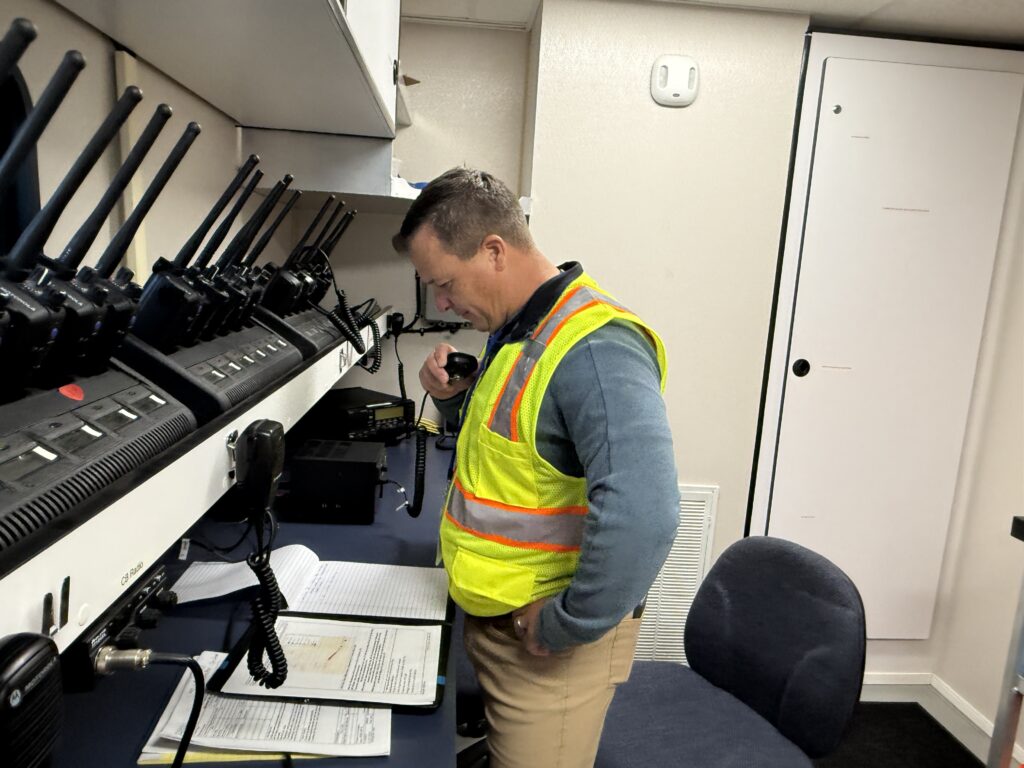
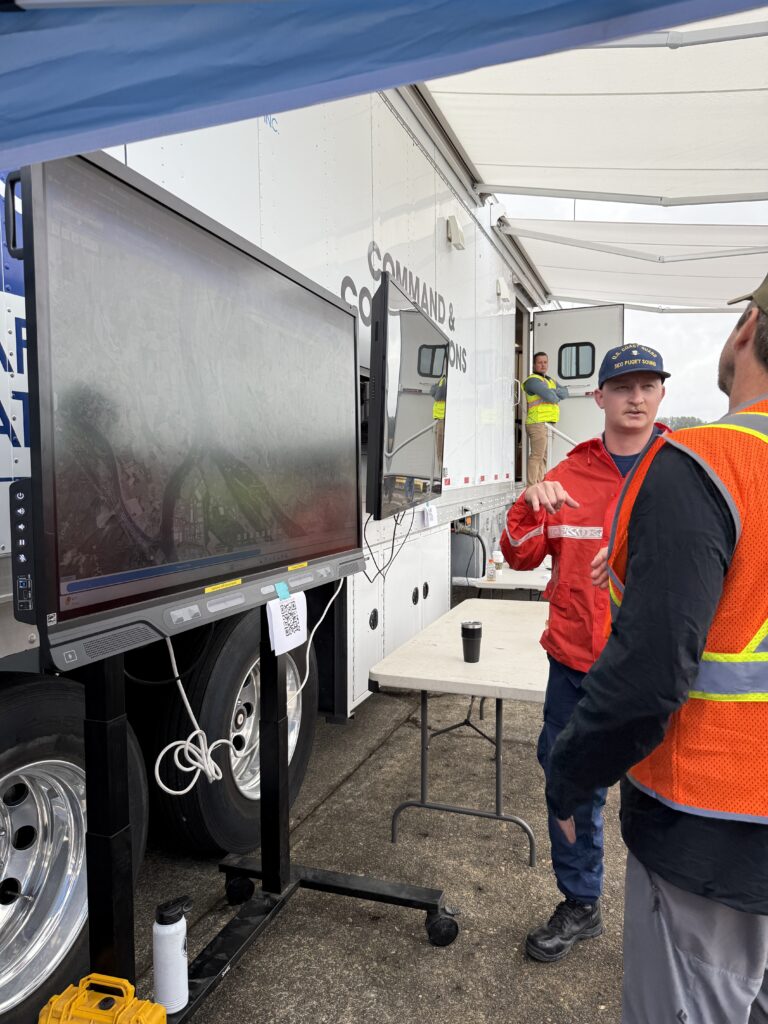
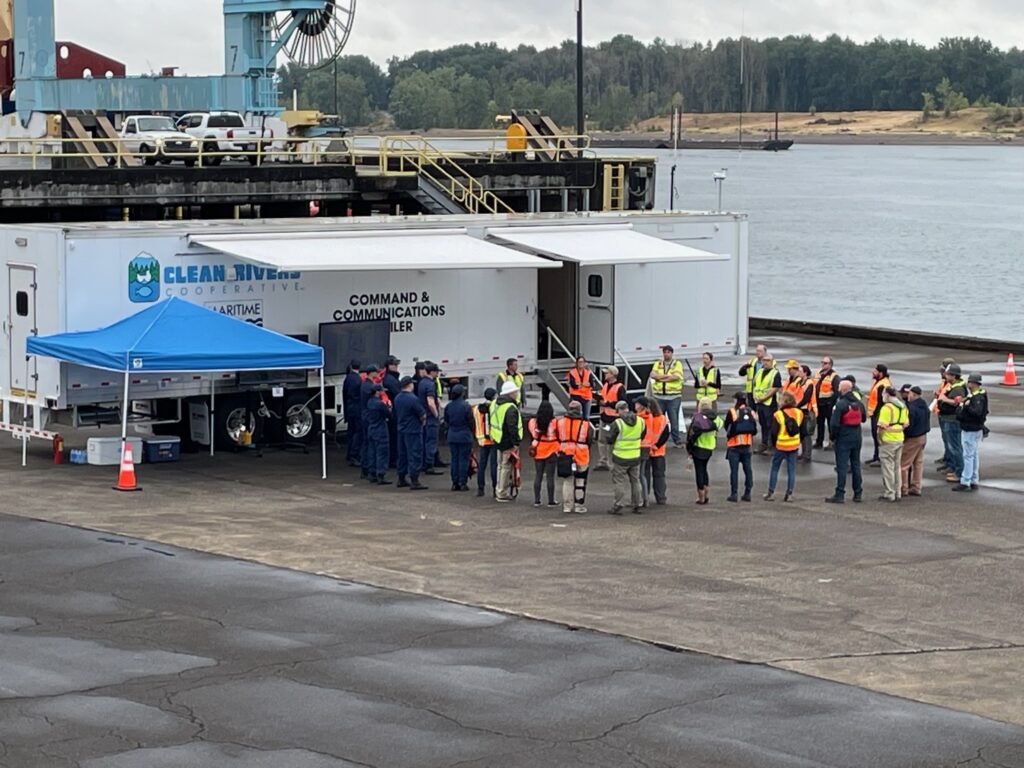
The command post was staged at the Port of Vancouver, anchored by Clean Rivers Cooperative’s 53-foot Command and Communications Trailer. The exercise was led by Washington Department of Ecology’s Shawn Zaniewski, with planning and facilitation support from Clean Rivers Operations Manager Carl Boelter.
The scenario was designed as a “mystery sheen,” simulating an unidentified source of oil on the water and involved Cooperative members Marathon Petroleum, Sunoco LP, Maritime Fire and Safety Association (MFSA), also BNSF Railway as multiple responsible parties. MFSA Interim Spill Response Coordinator (ISRC) Corbin Ross served as Operations Section Chief, overseeing tactical field operations and coordinating multi-agency deployment efforts. During this exercise MFSA exercised its Vessel of Opportunity (VOO) program.
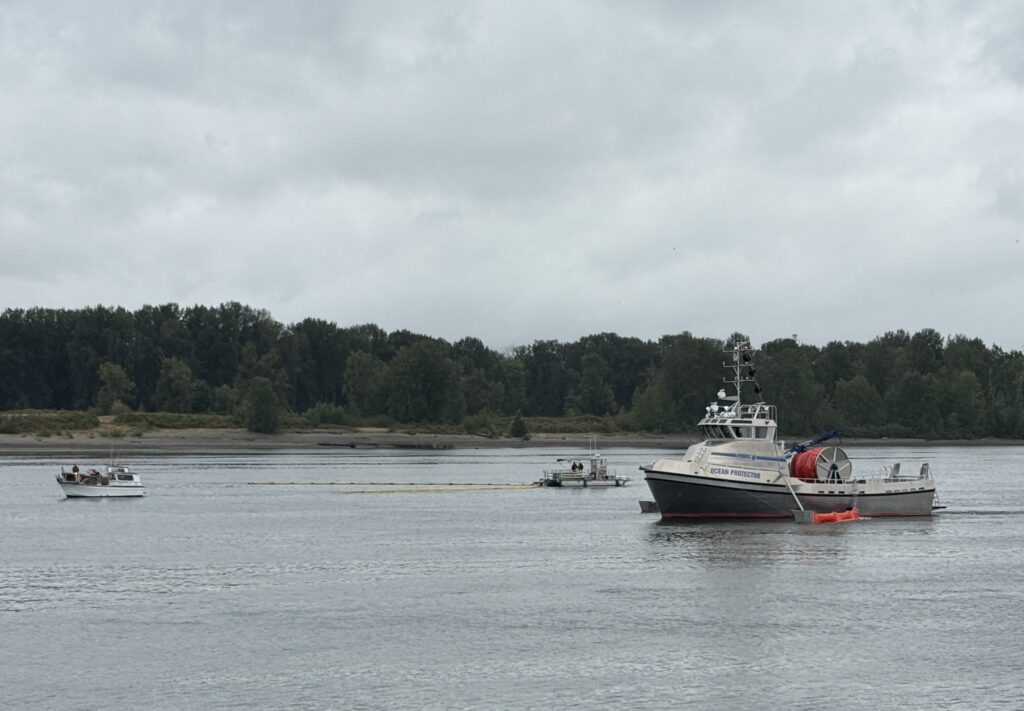
The Participating OSROs included Clean Rivers Cooperative (serving as Lead OSRO), Alaska Clean Seas (participating under APICOM’s mutual aid agreement), Clean Harbors, Cowlitz Clean Sweep (CCS), GrayMar Environmental, Marine Spill Response Corporation (MSRC), Republic Services (NRCES), and Whitewater Rescue Institute (WRI), which supported Air Operations with drone-based aerial surveillance. MSRC deployed its large response vessel Ocean Protector, a key asset in offshore containment and recovery.
Federal and state agencies observing and evaluating the exercise included the U.S. Environmental Protection Agency (EPA), Washington Department of Ecology, U.S. Coast Guard, Oregon Department of Environmental Quality (DEQ), and Washington Department of Fish & Wildlife. Their presence ensured compliance, effectiveness, and continuous improvement across all aspects of the response.
Under WAC 173-182-710, Washington requires a multiple plan holder large-scale equipment deployment drill in each Deployment Drill Region every three years. Region 1, in the Puget Sound area held their exercise in 2024 and region 3 on the Upper Columbia and Snake Rivers will hold their exercise in 2026. The Lower Columbia River resides in region 2. These exercises test operational readiness across organizations and include deployment of vessels, equipment, and personnel. They are scheduled at least 90 days in advance and are a cornerstone of the state’s oil spill contingency planning framework.
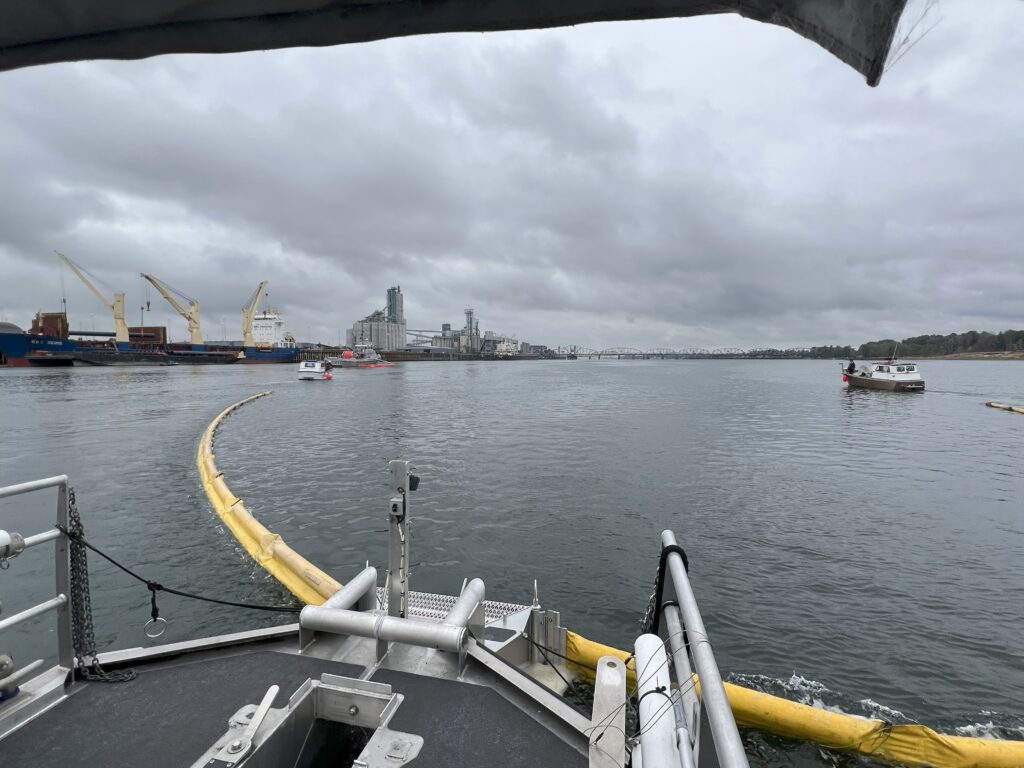
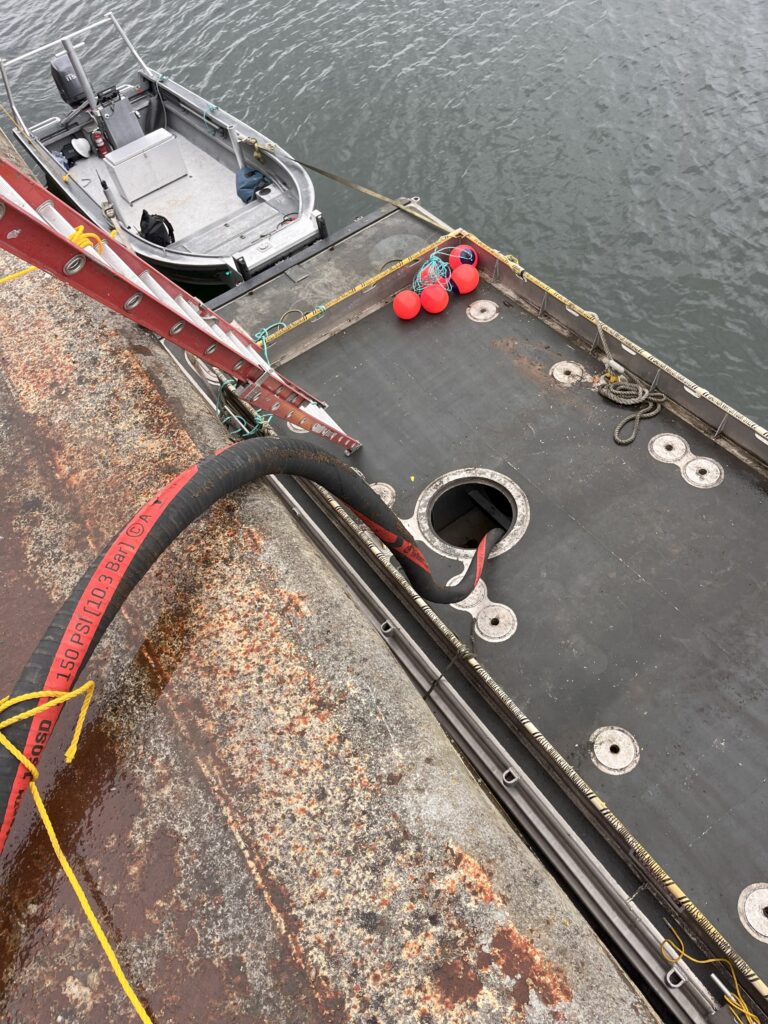
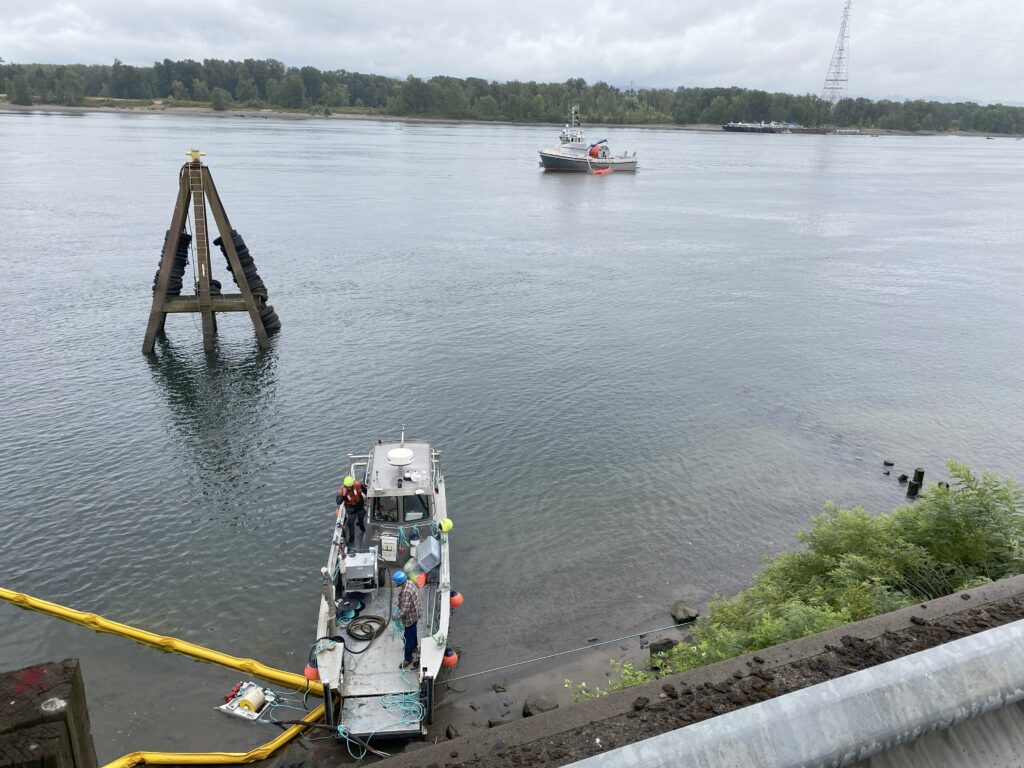
As part of the exercise, responders conducted tactical deployments aligned with Geographic Response Plans (GRPs) for sensitive areas along the river. Crew from Clean Harbors Environmental, Cowlitz Clean Sweep, and GrayMar Environmental deployed GRP sites LCR-100.8R, LCR-98.4L, and WR-0.09L to simulate protection strategies for high-priority environmental zones. MSRC’s Ocean Protector, supported by VOO and Clean Rivers assets, simulated skimming operations in active recovery zones. Clean Rivers Cooperative and Alaska Clean Seas demonstrated the transfer of recovered product from skimming operations using a 110-barrel barge, which simulated offloading to Tidewater’s on-water storage barge #2 staged across the river.
Republic Services contributed to the exercise by deploying 600 feet of containment boom to support an ad hoc collection strategy. This tactic was reinforced with a drum skimmer and a 70-barrel vacuum truck, simulating mobile recovery and shoreline protection. And WRI deployed their drone to simulate aerial observation of oil on water and also kept up on the Common Operating Picture at the Command Post. These operations showcased the flexibility and coordination required to adapt to dynamic spill conditions and protect sensitive resources.
This year’s deployment demonstrated the power of collaboration, mutual aid, and modern response tools like aerial drones. It reinforced the region’s commitment to protecting the Columbia River and its surrounding communities through proactive planning and coordinated action.
Clean Rivers Cooperative thanks all participants and observers for their dedication to environmental safety and response excellence.